Projects

GreenFieldData
Agrorobotics

GreenFieldData

2026 – 2031

GreenFieldData is a project carried out under a Marie Skłodowska-Curie Action – Joint Doctorate (MSCA Joint Doctorate), funded by the European Union, within Pillar I – Excellent Science of the Horizon Europe program. It starts in March 2026, and will finish in February 2031. The project coordinator is Sandro Bimonte, TSCF, INRAE. GreenFieldData will train a new generation of researchers able to tackle digital and green transition challenges using a human-centric approach to ensure the robustness and relevance of the solutions responding to the specific needs of the EU market in a context of climate change and increasing socio-economic constraints. At a policy level GreenFieldData outcomes will feed in directly to the aims of the HE Strategic Plan 2025-2027, EU Partnership Agriculture of Data and Digital EU Program. GreenFieldData proposes a high-level interdisciplinary, inter-sectoral and international (triple ‘i’) research project and training network on new IoRT (Internet of Robotic Things) based solutions for sustainable agriculture.

Partners
University of MilanUCD DublinInstitut National de Recherche pour l’Agriculture, l’Alimentation et l’EnvironnementAarhus UniversitetUniversité de LiègeUniversité Libre de BruxellesCentre National de la Recherche Scientifique CNRSUniversité Toulouse CapitoleInstituto Superior Técnico Lisboa
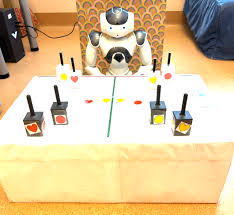
AIRCA Action Interaction between Humanoid Robots and Children with Autism Spectrum Conditions (ASC) within a social context
Assistive Robotics

AIRCA Action Interaction between Humanoid Robots and Children with Autism Spectrum Conditions (ASC) within a social context

2022 – 2025

AIRCA is partially funded by PRIN2022 Grant Number G53D23002860006 in the field of Life Science. The main coordinator is Prof. N. Alberto Borghese. The design of social robots is still a serious scientific challenge. Effective Human-Robot Interaction (HRI) in which robots can learn from, teach and be able to anticipate what humans will be doing and how to react appropriately are still distant. The still uncrossed frontier in robotics design is the ability for the robot to modulate its pace of interaction to the emotional state of the user. To be effective, social robots need to understand the emotional state of the human partner and modulate their actions accordingly. The overall goal of the AIRCA project is to endow robotic agents with the capability of choosing and modulating their actions to maximize the engagement of their human partner in a joint action scenario characterized by a sequence of complementary actions. To this aim AIRCA robot will be endowed with a personality that will allow on one side avoiding stereotyped behaviour, on the other it will support the Human partner to reach and maintain a specific emotional state (e.g. happiness, surprise, fear ). AIRCA robot is of particular interest for dealing with children with Autism Spectrum COndition (ASC). One of the main characteristics of ASC is a social difficulty that impairs effective communication with others and the capability to establish proper joint actions. Ministero dell’Università e della Ricerca MUR - BANDO 2022 Accumulated evidence shows that humanoid robots effectively engage children with ASC in games that require cooperation with them, therefore providing a very powerful support therapy based on joint activity that is at the core of treating social impairment in children with ASC. Starting from these previous studies, we will develop games based for instance on building block constructions to be played with a social robot whose actions (movement, gaze direction) and voice will be continuously modulated in time starting from the ecological estimate of the child’s emotional state based on automatic voice processing, gaze tracking and gesture analysis. This technological solution has the potentiality to greatly improve the treatment of children with ASC as it will allow to avoid the occurrence of meltdown states, i.e. the tendency of children with ASC to close in themselves. Furthermore, the interaction with the AIRCA robot can improve the social competence of children with ASC and may facilitate establishing a positive relationship also with another person such as the therapist. At the same time, given the difficulty of these children to interact with others, it will be an ideal testing scenario to define the most suitable modalities of action of a social robot that make its interaction with the Human partner most natural and rich. This would allow the development of the next generation of soc+ial robots that can sustain prolonged interaction with their Human partners in the most effective and natural way.

Partners
University of MilanUniverstiy of FlorenceUniversity of Milano-Bicocca
ESSENCE - Empathic platform to personally monitor, Stimulate, enrich, and aSsist Elders aNd Children in their Environment
Assistive Technologies

ESSENCE - Empathic platform to personally monitor, Stimulate, enrich, and aSsist Elders aNd Children in their Environment

2021 – 2024

ESSENCE received funding from the European Union’s Horizon 2020 research and innovation programme under the call SC1-PHE-CORONAVIRUS-2020-2B, grant agreement no: 101016112. ESSENCE aims at transforming the lessons learnt from the COVID-19 in a huge opportunity that exploits technology toward a deep evolution of the services targeting vulnerable populations: non- or pre-frail seniors, and children of the first years of primary school. To contribute to the public health response in the context of the ongoing epidemic, and preparedness for future emergencies, ESSENCE aims at boosting the creation of a new model of home-based care that relies on stimulation, remote monitoring, tele-assistance, and connection between users, families, and professionals. To offer a timely solution fully compliant with users’ needs, ESSENCE builds upon the results of MoveCare H2020 and undertakes the technology transfer of a subset of successful modules, adopting an iterative optimization process between technology development and users’ feedback.

Partners
University of MilanPolitecnico di MilanoUniversità dell'InsubriaFundesaludUniversity of HaifaSXT - Sistemi per TelemedicinaSmartCOMSignalGeneriXESeniors
MOVECARE - Multiple-actOrs Virtual Empathic CARegiver for the Elder
Assistive Robotics

MOVECARE - Multiple-actOrs Virtual Empathic CARegiver for the Elder

2016 – 2021

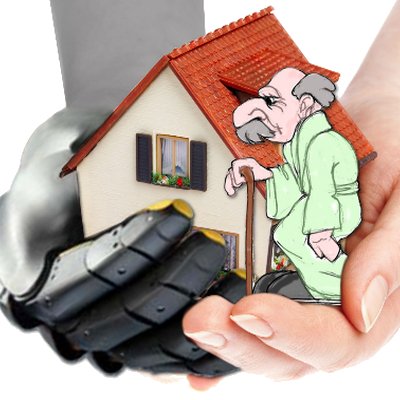
Project MOVECARE received funding from European Commission H2020 - project MoveCare - under Grant Agreement No ICT-26-2016b – GA 732158, Horizon 2020. MoveCare develops and field tests an innovative multi-actor platform that supports the independent living of the elder at home by monitoring, assist and promoting activities to counteract decline and social exclusion. It comprises 3 hierarchical layers: 1) A service layer provides monitoring and intervention. It endows objects of everyday use with advanced processing capabilities and integrates them in a distributed pervasive monitoring system to derive degradation indexes linked to decline. 2) A context-aware Virtual Caregiver, embodied into a service robot, is the core layer. It uses artificial intelligence and machine learning to propose to the elder a personalized mix of physical/cognitive/social activities as exergames. It evaluates the elder status, detects risky conditions, sends alerts and assists in critical tasks, in therapy and diet adherence. 3) The users¿ community strongly promotes socialization acting as a bridge towards the elders¿ ecosystem: other elders, clinicians, caregivers and family. Gamification glues together monitoring, lifestyle, activities and assistance inside a motivating and rewarding experience. Off-the-shelf components are assembled in a robust and reliable way to get a low-cost multi-actor IP-domotic platform that can be massively deployed at elders home. The use of software/hardware standards assures interoperability and makes MoveCare adaptable to utmost novel components. Full configurability, personalization, adaptation to elder needs applies to all components to maximize elder compliance, even when computer illiterate. On-field testing starting early in the project assures an implementation iterative approach involving all actors. MoveCare identifies functional and technical metrics to characterize and evaluate the system by means of improvement in its abilities as described by the Multi-Annual Roadmap. The metrics lead to the definition of an evaluation framework transferrable to other fields. Aislab and Prof. N. Alberto Borghese were coordinator of this project. Main results are reported here.

Partners
University of MilanPolitecnico di MilanoUniversity of MalagaÖrebro UniversityAb.AcusUniversity of ManchesterUniversity of PlymouthJunta de ExtremadraKorianSignalGeneriXEURECATUniversity of OxfordSmart COMIRCCS Istituti Clinici Scientifici Maugeri